Introduction
Piles (haemorrhoids) are very common but not something you will want to talk to your friend. About approximately, 50% – 60% of people have problems with piles at some point in their lives. Males and females are both affected with about equal frequency.
How do Piles occur?
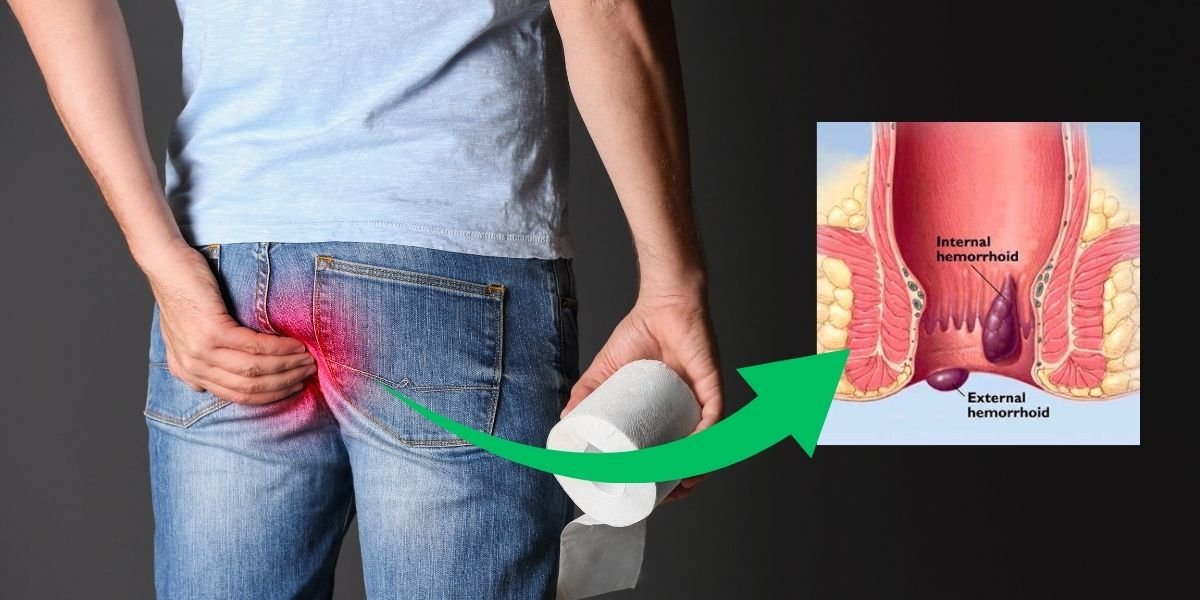
The large intestine is the last part of the digestive tract responsible for absorbing water and electrolytes from digested food and forming feces. It consists of cecum, colon, rectum and anal canal. Piles, also known as hemorrhoids are swollen veins in the anus and the lower rectum which can be internal (inside the rectum) or external (under the skin around the anus).
Hemorrhoids occur when the blood vessels in the anal or rectal area become swollen and inflammed due to increased pressure. This pressure can stem from various factors like straining during bowel movements, chronic constipation, pregnancy, obesity or prolonged sitting or standing.
Causes of Piles
Several factors can contribute to the development of hemorrhoids including-
- Straining during bowel movements- this can put extra pressure on the veins in the anal area.
- Chronic constipation or diarrhea- These conditions can also lead to increased pressure and irritation
- Prolonged sitting on the toilet- This can also increase pressure on the veins.
- Pregnancy- Hormonal changes and the pressure of the growing fetus can contribute to hemorrhoids.
- Aging- The tissues supporting the veins in the anal area can weaken with age, making them more susceptible to swelling.
- Low fibre diet- A diet lacking in fibre can lead to constipation and straining.
- lifting heavy objects- this can also increase pressure in the abdominal area and potentially affect the veins.
Types of Piles
Haemorrhoids can be grouped into four main types-
- Internal haemorrhoids- Internal haemorrhoids are swollen veins that develop deep within the rectum.
- Prolapsed haemorrhoids- Prolapsed haemorrhoids are internal haemorrhoids that protrude or have been pushed out of the anus Prolapsed haemorrhoids can be graded according to the extent of the protrusion:
- Grade I- No prolapse.
- Grade II- Prolapse occurs when there is increased pressure such as during passing stool.
- Grade III- haemorrhoids don’t retract back on their own , they will need to be pushed back
- Grade IV- The prolapsed haemorrhoids protrude out of the anus and cannot be pushed back into their normal positions.
- External haemorrhoids- These are visible and palpable lumps that form on the skin around the anus.
- Thrombosed Haemorrhoids- The thrombosed haemorrhoid is an internal or external haemorrhoid in which a blood clot, called thrombus, is formed.
Symptoms of Piles
In many cases, haemorrhoids don’t cause symptoms and some people don’t even realize they have them. However, when symptoms do occur, they may include-
- Bleeding after passing a stool
- Itchy bottom
- A lump hanging down outside of the anus.
- mucus discharge
- Soreness, redness and swelling around your anus.
How to avoid Piles?
To prevent piles, focus on maintaining regular soft bowel movements by increasing fibre intake, staying hydrated and avoiding straining during bowel movements. Additionally, regular exercise, limited prolonged sitting and maintaining a healthy weight can help reduce the risk.
Complications of Piles
While piles, also known as hemorrhoids are usually not a serious condition, they can cause complications if left untreated. Common complications include-
- excessive bleeding
- Anemia
- blood clots (thrombosed haemorrhoids)
- Strangulation
- infections
- anal fissures
- prolapse
- other digestive issues
Ayurvedic concept of Piles
Piles are categorised as a digestive aberration and the ayurvedic term for piles is ‘Arsha’ which signifies ‘pain that prick’s like a thousand needles’. It usually occurs due to the accumulation of waste material or toxins in the rectum and stems due to an imbalance of the tridoshas.
According to ayurveda, Arsha can be managed significantly by proper Ahara (food options and diet) and vihara (lifestyle modifications by incorporating herbs and natural formulations)
Ayurvedic treatment of Piles
Boolchand ayurveda provides a complete ‘piles care pack’ as the combination of various herbal products for the successful ayurvedic treatment of piles. The herbs used are 100% pure, natural and vegetarian. These are free from chemicals, additives and preservatives. These are safe to use as are free from side effects.
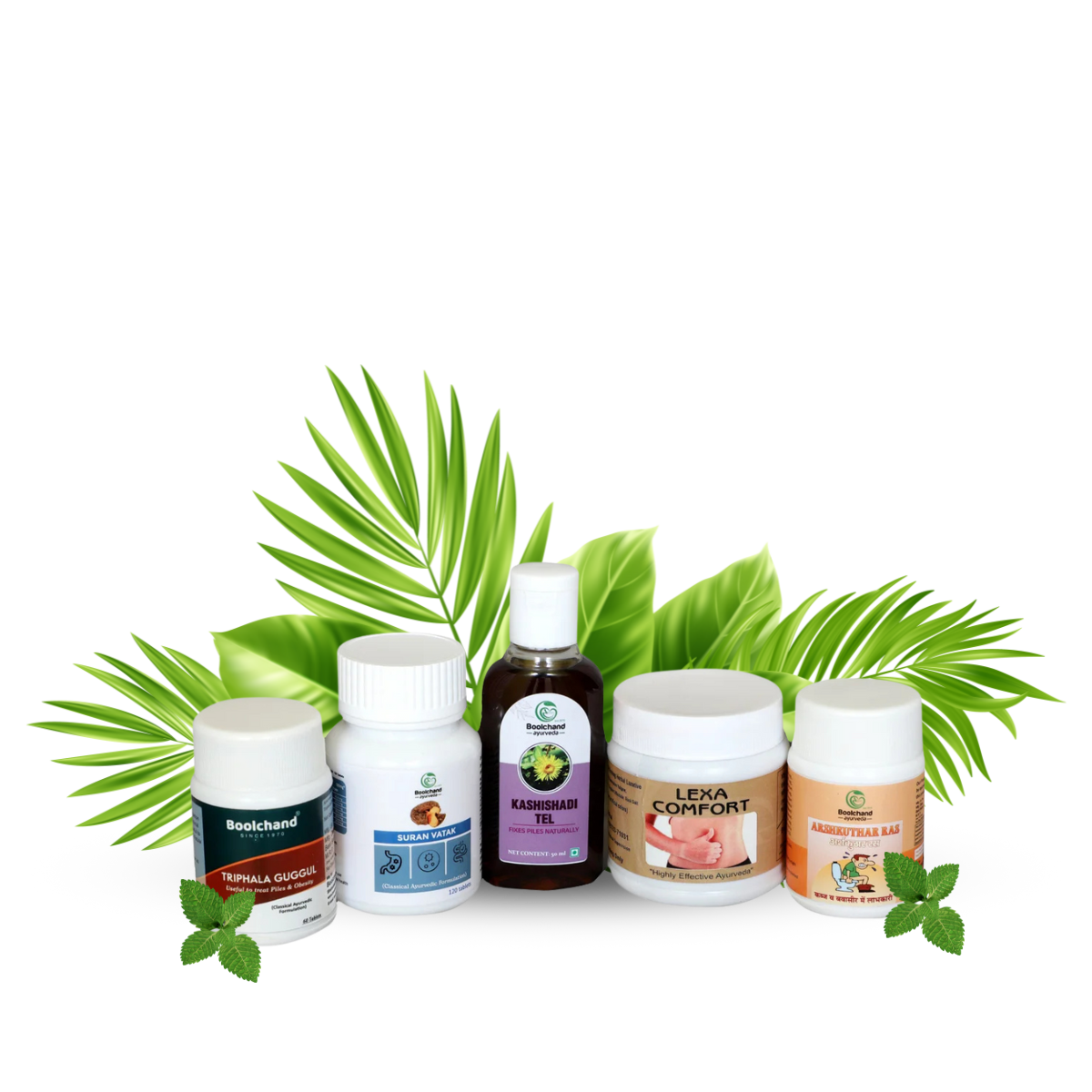
Piles Care Pack
Dosage
- Lexa comfort- 1 scoop of powder with luke warm water before bed time.
- Arsh kuthar ras- 2 tablets twice a day with luke warm water after meals
- Triphala guggul- 2 tablets twice a day with luke warm water after meals.
- Kashishadi tel- for local application on affected area.
- Suran vatak- 2 tablets twice a day with Luke warm water after meals.
Product description
1- Arshkuthar ras
Arshkuthar ras is an ayurvedic medicine used for the treatment of hemorrhoids. It is the combination of herbs and minerals containing kajjali, lauha bhasma, shunthi, tamra bhasma, Dantimool, marica pippali, surana, vamsha, shuddha tankana, yavakshar, saindhava lavana.
Benefits- It works by improving liver functions, vein strength, easing constipation, shrinking the pile mass and reducing local swelling and inflammation.
2- Triphala guggul
Triphala guggulu is an ayurvedic formulation that provides the combined effect of Triphala and guggulu. Triphala beings detoxifying and laxative properties while guggul provides anti – inflammatory properties. The combined effect of these ingredients helps to provide relief from piles, anal fistula and constipation.
Ingredients- It is made up of amla, harad, baheda , pippali, Guggul, ghee.
Benefits- According to ayurveda, it works by stimulating the digestive fire which in turn relieves constipation, promote healthy metabolism and releases excess kapha from the system. This further prevents piles and gives relief from the pain, swelling and other discomfort associated with them.
3- Kashishadi tel
Kashisadi tailam is an ayurvedic oil used in the treatment of piles . It is only meant for external application over the piles. This product contains herbal and mineral ingredients.
Benefits- It shrinks the pile mass and is corrosive in nature.
4- Lexa comfort
Lexa comfort is a potent ayurvedic formulation of boolchand ayurveda that contains the goodness of shunthi (Ginger), Swarni patri(Senna leaves), Saunf (fennel seeds), Saindhava lavana (rock salt) and balaharitaki (unripe fruits of terminalia chebula)
Benefits- The powerful laxative quality of this formulation can help treat persistent constipation. It also contains carminative substances which aid in evacuating gas from the stomach, reducing bloating and flatulence.
5- Suran vatak
Suran vatak is a classical ayurvedic medicine used for the treatment of hemorrhoids. It mainly contains Surana – wild yam (Amorphophallus campanulatus) which is effective in treating the constipation, control of bleeding and reduction in number as well as size of pile masses. Other ingredients are Vridhadaru (argyrea speciosa), mushali (curculigo orchiodes), chitraka (plumbago zeylanica), shiva-haritaki, vidanga, pippali, talisa patra and twak which are also effectively used in the treatment of piles.