
Introduction
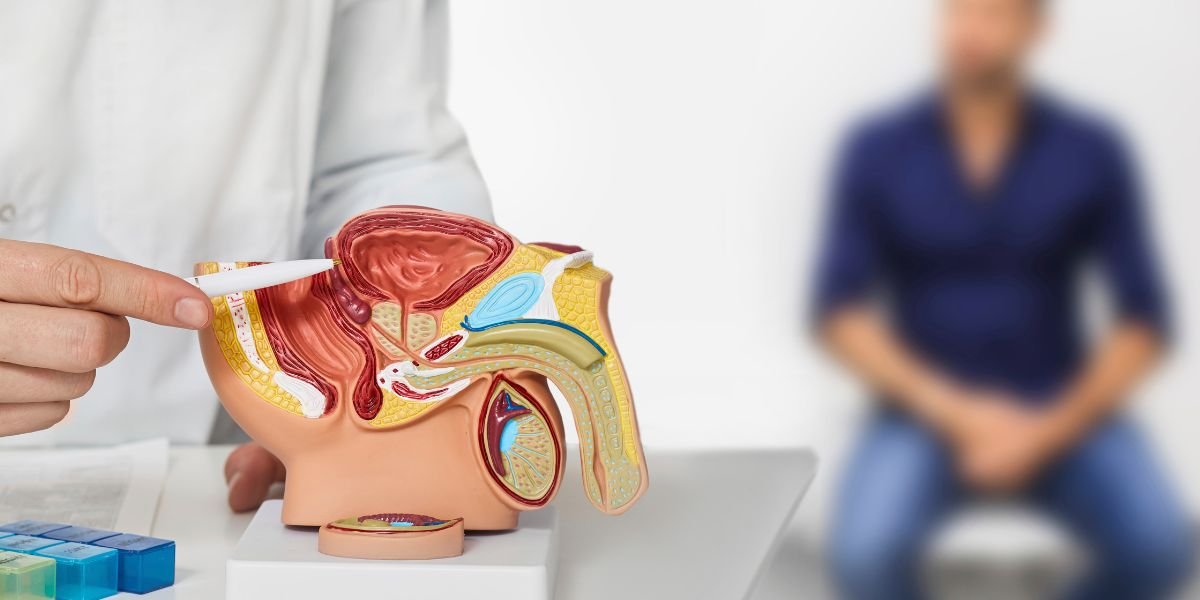
The prostate gland is a small sized gland in males which is located below the bladder and surrounding the urethra (a tube that carries urine and semen out of the body)
Benign prostate hyperplasia a term, used for a noncancerous enlargement of the prostate gland, which is common in older men. It puts pressure against urethra can cause urinary problems like frequent urination and difficulty emptying the bladder.
Causes
The primary cause of prostate enlargement is aging. It is most common in men over 50 and it’s prevalence increases with age.
Other Causes Are: –
- Hormonal Changes – As men age, testosterone levels naturally decline, while estrogen levels may remain relatively constant or even increase. This shift in hormone balance is thought to promote prostate cell growth.
- Genetic factors
- Suppression of urge for urinating
Other Factors Include: –
- Obesity
- Lifestyle factors
- Family history
- Insufficient physical work
Symptoms
- Weak or interrupted urine flow
- Strain to empty bladder
- Leaking urine after finishing urination
- Waking up multiple times at night to urinate
- Incomplete bladder emptying
- Pain & discomfort while urinating
- Blood in urine
- Emotional distress
- Urinary tract infection
Complications
- Urinary retention: Difficulty emptying the bladder, leading to urine retention.
- Urinary tract infections (UTIs): Increased risk of UTIs due to incomplete bladder emptying.
- Bladder stones: Increased risk of bladder stones due to urinary retention.
- Kidney damage: Untreated BPH can lead to kidney damage or kidney failure.
- Decreased quality of life: BPH symptoms can impact daily activities and overall quality of life
Diagnosis
Talk to your health care provider about your symptoms, even if they don’t bother you so it’s important to find out if there are any causes that could be treated. Without treatment, the risk of a dangerous blockage of the urinary tract can rise.
Following Test: –
- Urinalysis
- Urodynamic test
- Prostate-specific antigen (PSA) test
- Cystoscopy
- Post void residual measurement.
Ayurvedic View on Benign Prostate Hyperplasia
Benign prostate hyperplasia is linked to vataashtila, where the vata dosha one of the three fundamental energies in ayurveda, is aggravated and cause obstruction in the urinary flow and muthrakhatha, which refers to difficulty in urination due to obstruction.
Dietary Recommendation
- Fruits & vegetables which rich in antioxidants & fiber
- Avoid the fried & junk foods
- Caffeine & alcohol can irritate the bladder & worsen symptoms
- Stay hydrated
- Limit fluids before bedtime
- Maintain a healthy weight
- Food which is heavy to digest avoid it
- Take less salt as it causes fluid retention.
Ayurveda Treatment of Benign Prostate Hyperplasia
Ayurvedic management of enlarged prostate includes pacifying aggravated Vata and kapha dosha, relieving the symptoms, facilitate shrinkage of prostate and improve the quality of living of the patient.
Boolchand ayurveda provides the best herbal formulations as Prostate Care Pack for the ayurvedic treatment of benign prostate hyperplasia. All the products are 100% pure, natural and vegetarian. These are free from chemicals, additive’s and preservatives. These are safe to use as are free from any side effects.

Prostate Care Pack
Product Description
1. Uri Flush
Uri flush is the excellent production of boolchand ayurveda which is mainly sheetal chinni (Cubeb pepper), Revan chinni (Indian Rhubarb), Shwet parpati (Ksharaparpati) , Ber patthar and Elaichi (Green cardamom). Sheetal chinni & Revan chinni helps in increasing urination due to its diuretic property. It helps in increasing the excretion of sodium ions in urine by increasing urine production. Shwet parpati used to treat conditions like painful urination, oliguria, colic, UTIs, urinary colic and hyperacidity . Ber patthar is also a good remedy for renal colic, dysuria and urinary retention.
Dosage – 1 scoop of powder with plain water in morning after meals.
2. Detox Powder
This ayurvedic medication has shown very significant effect on benign prostate hyperplasia due to it’s antiseptic and laxative property. Shodhana chikitsa is done to remove the vitiated dosha.
Dosage – 1 scoop of powder with plain water after dinner at night.
3. Iron and Calcium Compound Special
This ayurvedic medicine is made from a blend of 37 natural herbs and minerals including shilajit, guggulu, Amla, Haritaki and Vacha . This herbal tablet is used to balance the vata and kapha dosha (body energies) and support overall health. It improves urine flow and reduce burning sensation. It also promotes prostate health by significant reduction in prostate weight and volume thereby causing it’s shrinkage.
Dosage – 2 tablets with plain water after dinner at night.
4. Kanchnar Guggul
Kanchnar Guggul is a traditional classic poly herbal formulation used for the treatment of tumours, cystic swelling, PCOS and ulcers. It reduces swellings and lumps by drying the excess kapha and fluid in the body. Kanchnar Guggul contains triphala and trikatu, which contain vitamin C. This might help in relaxing the muscles of the prostate and the bladder neck. This might help relieve pressure and improve urination.
Dosage – 2 tablets with plain water in morning after meals.
5. Gokshur Kadha
Urinary condition such as urinary incontinence, painful urination and burning sensation when urinating may benefit from the Gokshur kadha.
Dosage – 20ml twice daily and mix with an equal amount of water and consume after meals.