Introduction
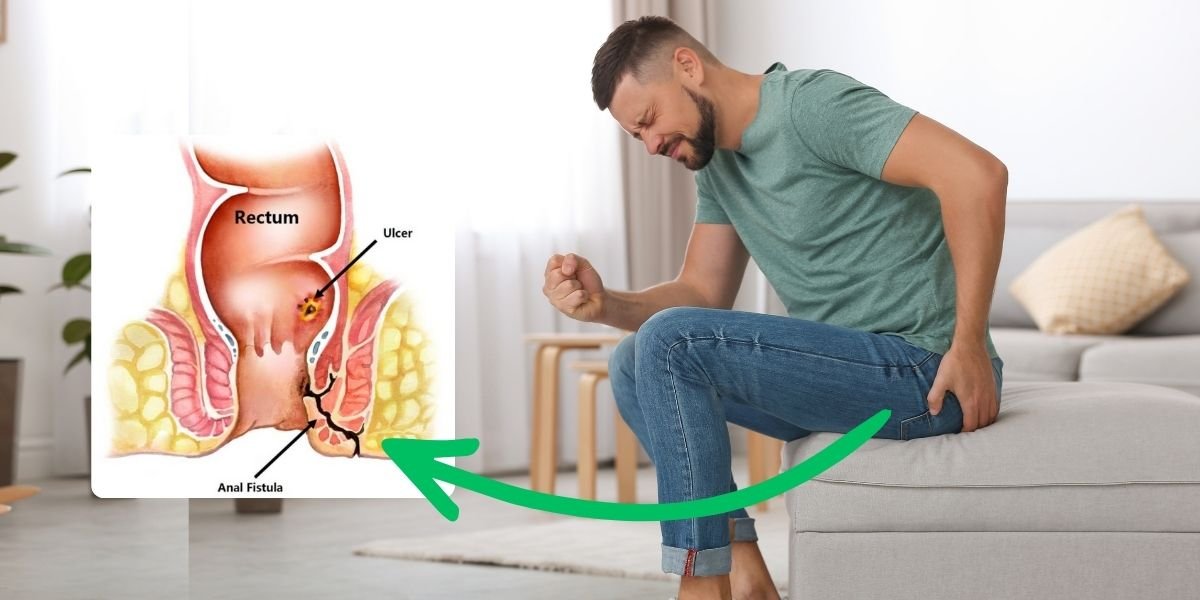
Anal fistula is a chronic abnormal communication between the anal canal and the perianal skin.
An anal fistula can be described as a narrow tunnel with its internal opening in the anal canal and its external opening in the skin near the anus.
Anal fistulae per se do not generally harm, but can be very painful, and can be irritating because of the drainage of pus (it is also possible for formed stools to be passed through the fistula).
In ayurveda , it is called ‘bhagandara’.It means the condition resulted due to laceration or lesion in guda (anus) bhanga (pubic region) basti (area of bladder). In ayurveda fistula or other diseases classified according to the vitiation of one or more dosha i.e. Vata, pitta, kapha.
Causes of Anal Fistula
Most anal fistula develops after an anal abscess. You can get one if the abscess doesn’t heal properly after the pus has drained away.
Less common causes of anal fistulas include:
- Crohn’s disease– A long-term condition where the digestive system becomes inflamed.
- Diverticulitis– Infection of the small pouches that can stick out of the side of the large intestine (colon)
- Hidradenitis suppurativa– A long-term skin condition that causes abscesses and scarring
- Infection with tuberculosis (TB) or HIV
- A complication of surgery near the anus
Symptoms of an anal fistula
- Skin irritation around the anus
- A constant, throbbing pain that may be worse when you sit down, move around, poo or cough.
- Smelly discharge from near your anus.
- Passing pus or blood when you poo
- Swelling and redness around your anus and a high temperature if you also have an abscess.
- Difficulty controlling bowel movements (bowel incontinence) in some cases.
Who is at risk?
If you develop an anal abscess, you have about a 50% chance of developing an anal fistula. Even if your abscess drains on its own, you have about the same risk for a fistula.
Certain conditions that affect your lower digestive tract or anal area may also increase your risk. These include:
- Colitis
- Crohn’s disease
- Chronic diarrhea
- Radiation treatment for rectal cancer
Classification of anal fistula
The diseases is classified into four main types:-
- Intersphincteric fistula- This is the most common type, where the fistula tract passes through the internal sphincter but spares the external sphincter.
- Transphincteric fistula- The fistula tract passes through both the internal and external sphincters.
- Suprasphincteric fistula- The fistula tract passes through the internal sphincter and then extends above the external sphincter before reaching the perineum.
- Extra sphincteric fistula- This is the least common type, where the fistula tract passes laterally to both the internal and external sphincters.
Ayurvedic classification of anal fistula (Bhagandara)
Bhagandara is of 5 types. They are as mentioned below-
1- Shataponaka Bhagandhara
Vataja or Shataponaka Bhagandara
Causes- Excessive consumption of Kashaya (food predominant in astringent taste) and Rukhsa (dry) foods
The Vata aggravated due to the above said causative factors will cause a pidaka or blister in the anal region. This pidaka when neglected gets ripened (suppurated).This is called Vataja Bhagandara
Symptoms
- Pakwa Pidaka- Ripened blister
- Daruna Ruja- Severe pain
- Bhinna aruna phena vahini- When the blister opens it presents aruna (reddish yellow) and phena (froathy) discharges
- Aneka vrana- Many openings
- Mutra-pureesha- retasaam aagame – Discharge of urine, stools and semen through multiple orifices of the fistula
2- Ushtragreeva Bhagandhara
Paittika (Ushtragreeva) Bhagandara
Causes- Excessive consumption of Pitta aggravating foods and lifestyle practices
The Pitta aggravated due to the above said causes a red coloured blister near the anal region. This is called Pittaja or Paittika Bhagandara.
Symptoms
- Ashupaki- the lesions get ripened quickly
- Ushna sraava- hot discharge
- Puti srava- foul smelling discharges
3- Prisravi Bhagandara
Kaphaja (Parisraavina) Bhagandara
Causes- Excessive consumption of Kapha aggravating foods and lifestyle practices
The kapha aggravated due to the above said causes a blister in the anal
region. This is called Kaphaja Bhagandara.
Symptoms
- Kanduyana- itching
- Ghana sravee- dense discharges (thick)
- Kathina- hard in consistency
- Manda vedana- mild pain
- Shweta avabhasa- white coloured
4- Shambukavarta Bhagandara
Sannipataja (Shambukavarta) Bhagandara
Causes- consumption of food and activities which aggravate all the 3 doshas
All the 3 doshas aggravated due to the consumption of above said causes will cause blisters in the anal region. This is called Sannipataja Bhagandara.
Symptoms
- Bahu varna srava- discharges of various colours
- Bahu rujaa- various types of pain
- Bahu sraavaa- severe discharges
5- Agantuja Bhagandara
Agantujam (Unmargini) Bhagandara
Causes- Injuries occurring in the anal region
When the anal region gets injured from any sharp instrument, a sinus is formed. When this sinus is neglected, it gets infested with worms and microorganisms. The microorganisms further go deep inside by drilling the pathway of the sinus and contaminate the tissues. Blisters are formed around the anal region and the worms cause many openings in the lesion.
Bhagandara chikitsa / Treatment of Anal fistula
Boolchand ayurveda offers best treatment for the fistula as “fistula care pack” which includes various effective herbal products .These products are 100% natural, pure and made up of high quality herbs. These are free from chemicals, additives and preservatives. They are highly effective and free from any side effects.
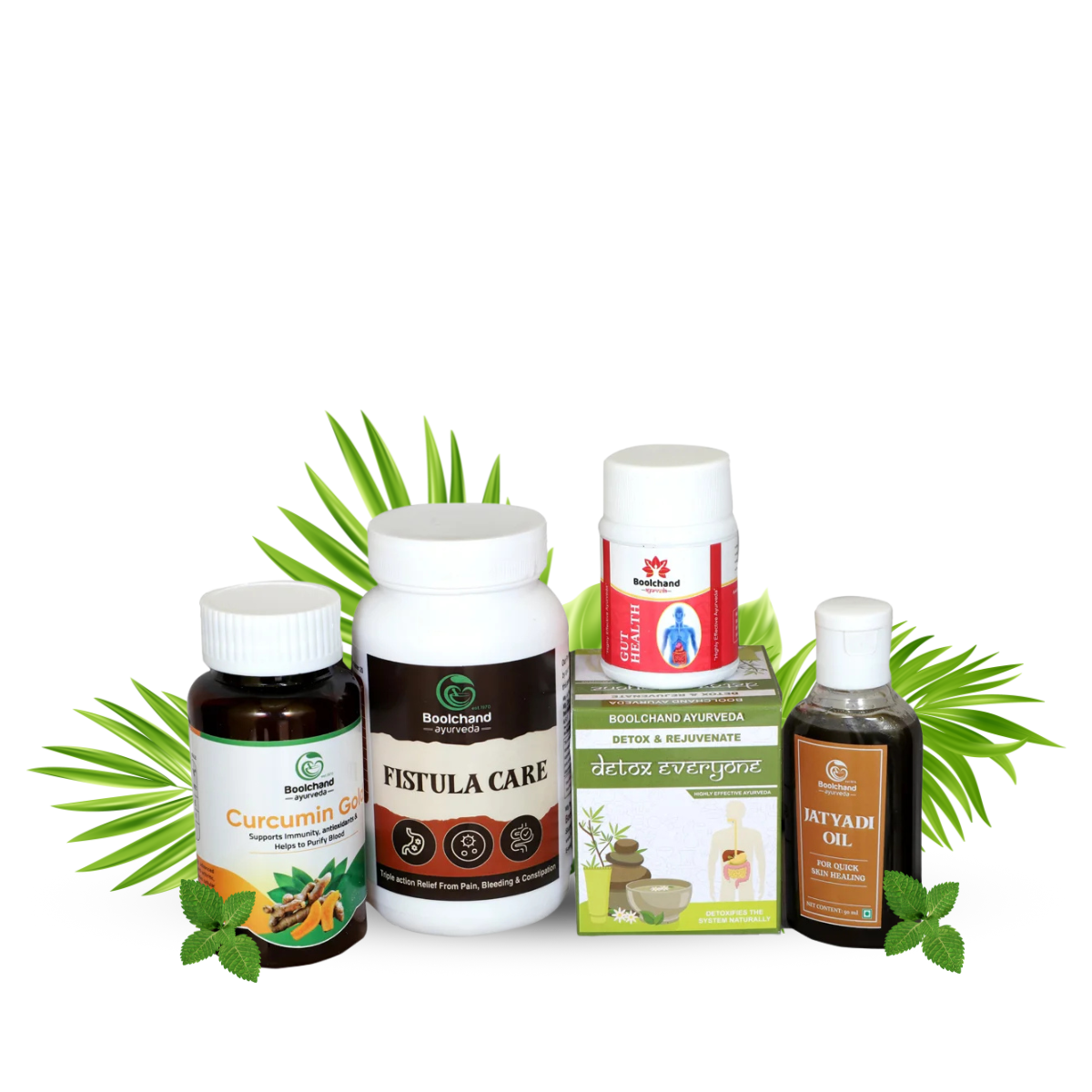
Fistula Care Pack
Products Description
1- Gut health tablet
This poly-herbal combination is recognized as a potent rasayani dravya by the holistic discipline of ayurveda for treating anal fistula.
Ingredients:- It is a combination of several potent herbs that work synergistically to promote overall well-being. The preparation of this formulation involves a traditional ayurvedic process called guggul kalpana, where the herbs like trikatu, triphala, Vaividang, elaichi, piplamool, nagarmotha, giloy, chitrak, pushakmool, haldi, chavya, devdaru & kala namak are combined with shuddha guggulu to form a solid tablet like formulation.
Benefits:- Gut health tablet is an ayurvedic proprietary medication that is chiefly used to cure infections, prevent suppuration , treat fistulas, cure sinus infections, remedy skin woes and minimize pus discharge. It has antiseptic, antibacterial and disinfecting qualities. Its bio-active components encourage cell regeneration, aid in healing and aid in the treatment of scar tissue.
Dosage:- 2-2 tablets twice a day (morning and evening) with plain water after meals.
2- Detox powder
Detox powder is an ayurvedic medicine prepared by boolchand ayurveda in herbal powder form.
Ingredients
- Neem (Azadirachta indica)
- haritaki (chebulic myrobalan)
- vibhitaki (Terminalia bellirica)
- amalaki (emblica officinalis)
- shunti – Ginger (Zingiber officinalis)
- maricha- Black pepper (piper nigrum)
- pippali- Long pepper (piper longum)
- haridra- Turmeric rhizome (curcuma longa)
Benefits:- It is useful in non healing ulcers and pains associated with anal fistula. Its anti inflammatory properties help reduce swelling
Dosage:- 1 scoop of powder at bedtime in night with luke warm water.
3- Fistula care
This ayurvedic formulation of boolchand ayurveda gives the symptomatic relief to the patient of anal fistula. It is the combination of many herbs like chopchinyadi, pippali, pippalimool, lavang, kali mirch, akarkara, khurasani ajwain, sonth, vidang and dalchini. Chopchinyadi is a herbal antibiotic formulation which is beneficial in ulcers, fistula, skin diseases, draining boils, abscess, goitre and gonorrhea. Pippali (piper longum) has antioxidants, anti mycobacterial, immuno stimulant and anti microbial activities. Pippalimool is useful in indigestion and bloating. Kali mirch has also antibacterial activities. Due to analgesic and anti inflammatory property of sonth, it is equally beneficially in anal fistula. Akarkara and dalchini are also used in enhancing digestion and in the treatment of diseases caused due to predominance of vata dosha
Dosage:- 1 scoop of powder once a day (in morning time) after meals with plain water
4- Curcumin gold
Curcumin derived from turmeric, possesses anti inflammatory and anti microbial properties which might aid in managing anal fistula symptoms. While not a cure curcumin may reduce inflammation and potentially help with pain and infection.
Dosage:- 2 capsules once a day with plain water
5- Jatyadi tel
Jatyadi taila contains ingredients like neem and karanja which are known for their antiseptic and antibacterial qualities, potentially helping to prevent or manage symptoms associated with fistula’s including pain, inflammation, infection and promoting wound healing.
Dosage:- for local application on affected area.